
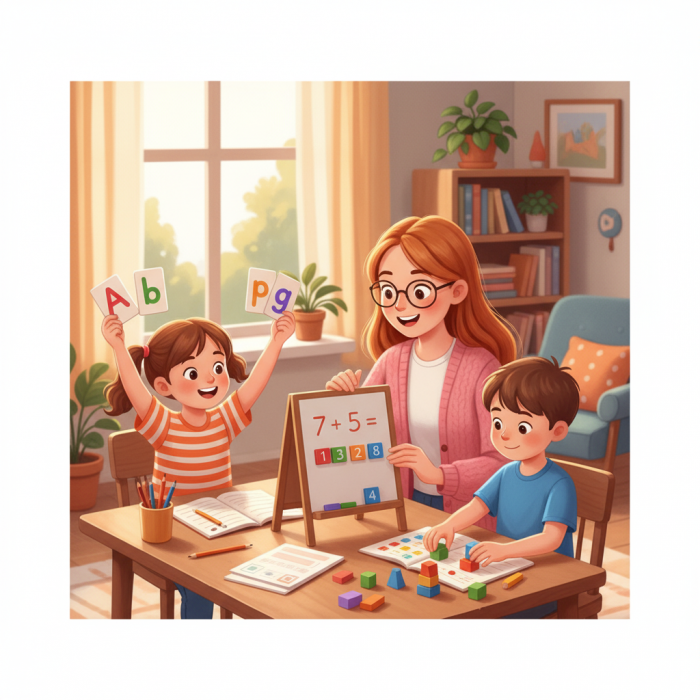
This is so much easier than it seems and far easier than people like to believe.
Let’s focus on reading first:
In mainstream schools, particularly in the UK, they use a phonics only approach to reading.
This includes making up fake words and using specific sentences to teach how to decode and sound out words in order to read.
The stories are not like normal stories and for some reason they have separated reading, writing, comprehension and phonics into completely different things and subjects. So children learn phonics in isolation from actually reading a book.
Its bizarre and many education experts are pointing out that this is the reason that children do not enjoy reading as they get older.
You can read some thoughts here: https://www.mmu.ac.uk/news-and-events/news/story/phonics-isnt-working-childrens-reading-improve-they-need-learn-love
So here is a better and much easier approach that children actually enjoy.
1 – Read with your child every day. Choose a small selection of books, 3 to 5 different but simple books. Books like Spot, Fox’s Socks, or Dear Zoo.
2 – Make it fun. Get into the stories and characters, get emotionally invested in the stories and you will giggle so much with your child/children. Reading with you will be something that they can’t wait to do every day!
3 – Start teaching them the alphabet. Do this through play by drawing the letters, or with magnetic letters and pointing out letters and words in your every day activities.
4 – If you have space use a large whiteboard with markers, let your little ones scribble on it and enjoy the feeling of writing and copying letters etc. Pretend their scribbles say really bizarre things: ‘Mummy ate all the chocolate cake??’ How did you know!!” ‘There is an elephant in the fridge?? We better check!!” and so on.
5 – Soon your little ones will start writing the letters and will probably be interested in writing their names and then the names of family members too. Congrats! This is the beginning of reading and writing!
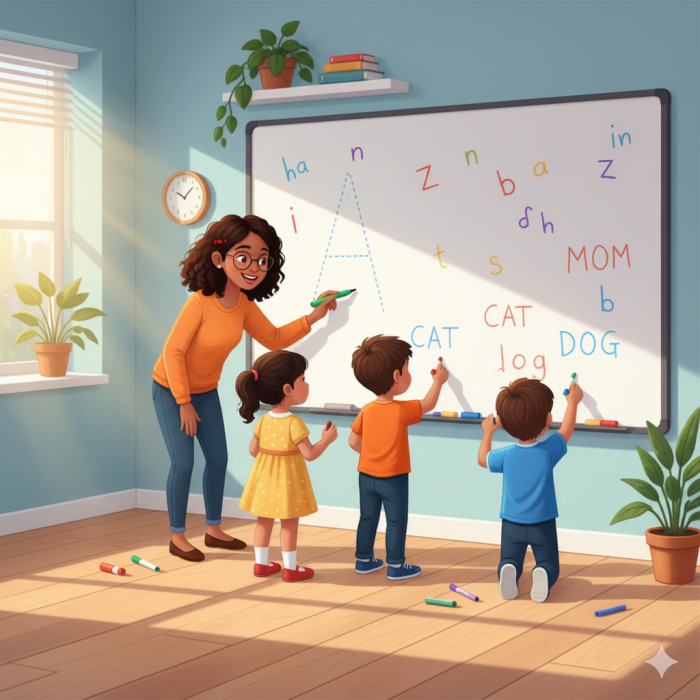
6 – Start introducing the concept that letters make sounds and different letters make different sounds. (Basic phonics)
7 – Also start looking at basic two and three letter words: Me, You, It, If, We, Hat, Rat, Bed, On, Off (this can be as early as 2 years old, but pay careful attention to how long they are interested, it might only be a minute or two which is fine, they are still learning lots). You may have to wait until they are 3 or 4 years old before they are ready to learn, age really doesn’t matter at this point, every child develops differently. Keep playing with them and keep reading with them.
8 – As they become more interested, which is usually somewhere between ages 4 – 6, they will want to know more and more words. They will want to know how to read and where to find these words in their favourite books that they have read with you so many times. This is a truly fun and precious time!
9 – Revisit common words in their books and talk about the sounds and why they are spelt the way they are. Keep it in context and don’t overwhelm them, make sure they still enjoy the stories and the reading time with you. They may even start joining in by reading the words they recognise for you or with you.
10. Start making small lists of words that vary in length from two to four letters with your child that they can write by copying or memorising and slowly build them into fun sentences. E.g. It, is, hot, cold, fun, my, box, red, egg. You can make these into sentences: It is hot. My egg is in the box. My egg is red! And so on.
Use a mixture of sounding out (phonics) and memorising letter combinations like ‘the’ to read words and work out what they say.
Using this method at around 4.5 to 5 years old your child should be able to read and write basic sentences within a few weeks. Most importantly they will enjoy the process, develop a deep love of learning and build up their understanding of texts and comprehension.
If you keep adding 2 new words per week, keep reading and writing with your child, they will become fluent readers who genuinely enjoy books and love writing.
You can write separate words on large pieces of card and let them rearrange them to build up sentences.
Also sticking their words of the week on the wall is a great way to help them memorise the sounds and spelling.
Asking them why their name (or any family member’s name) is or isn’t spelt with specific letters is a good way to build understanding of sounds and letter combinations.
Whilst this approach still uses some phonics teaching, it is done within context of fun stories and games. It gives children a reason to look at words and sentences. It combines all aspects of reading and writing and keeps the enjoyment and fun of reading as the main reason for learning.
Writing and posting letters to family and friends is another fun activity that builds numerous skills.
Games and resources for learning letters and words:
Scrabble tiles or anything similar that allows children to pick up and physically move the letters and words around on a table are great.
Large word cards which you can make at home or purchase are fantastic as it means children will be moving around the room putting words and letters in the right order – be careful your floor and walls will be covered in sentences!
Alphabet posters, some include basic words as well, available in poundland or other discount stores.
Allowing your child to choose their own notebook and writing pen is always a winner!
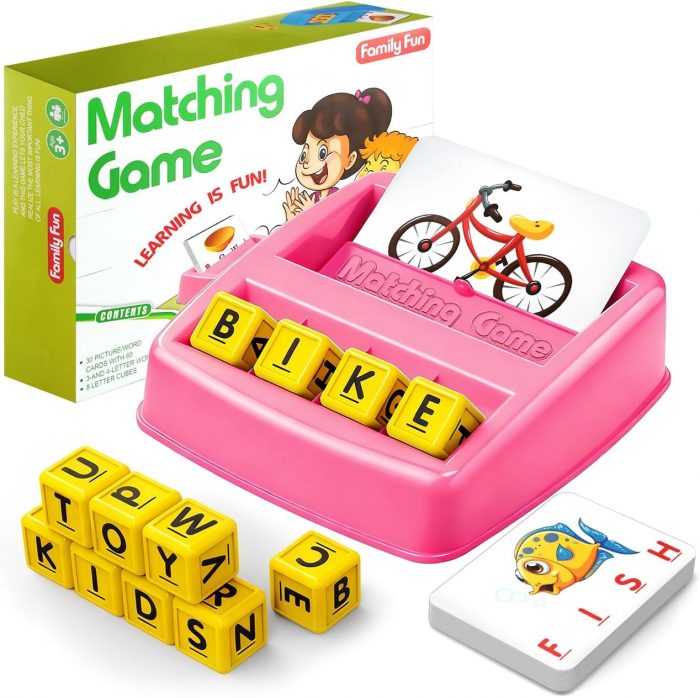
Spelling and word matching games are great for taking a break from writing.
A note about testing and assessments:
You will notice I haven’t mentioned any kind of testing here. This is because if you work with your child you will know what they are capable of and how many words they are able to read.
You will know if they are guessing words or actually attempting to sound them out and see what they say.
I personally don’t think that formal tests at this age are beneficial, discreet assessing as you go is the best way. Encourage your child lots and celebrate all the wins. Never make them think they should be learning faster or that they are behind.
Find new games and new methods to keep their interest, having a day off is ok too.
I hope that has been useful so far. I will tackle the maths learning in the next post!
See you there and as always please post any thoughts or comments below – even if you disagree with this method!
Comments