
Its true what they say about the link between play and staying youthful.
I approach most things in life as a puzzle solving game.
This means I’m not afraid to make mistakes (as long as no one’s feelings are hurt and I’m not doing anything immoral of course!) and I’m always open to trying new and different approaches.
It also means I enjoy my problems as opposed to finding them stressful!
We need to find ways to instil this mindset and approach into older children – preteens, teens and young adults.
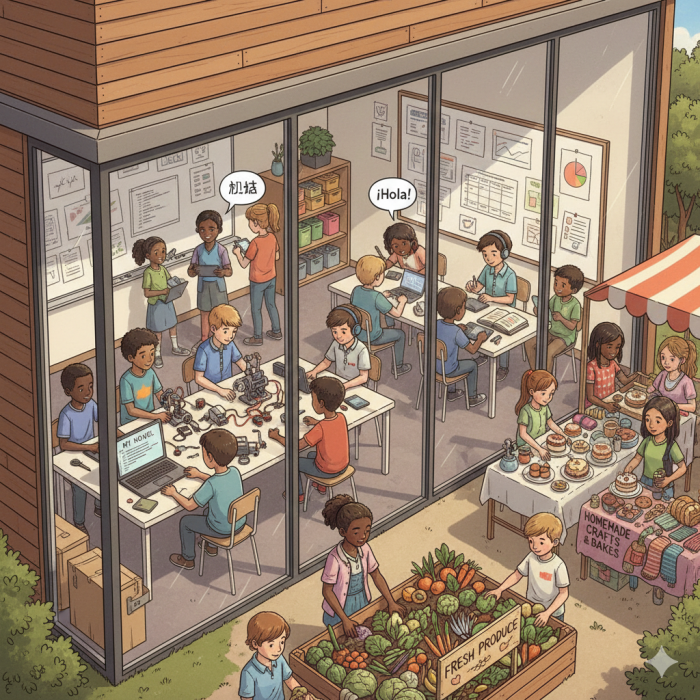
I used to work with a lot of teenagers when I taught robotics in various different secondary schools.
Here are a few things I noticed:
- They loved it when I taught less and let them work things out
- They loved the freedom of choosing their own tasks for their robots
- They enjoyed having an adult there in case they got really stuck
- They loved the choice of competing if they wanted to
- They loved playing around with the software without too much help
- Because there was no exam, they were not limited by any parameters.
In other words, they loved being in charge of their own learning. They were grateful when they were trusted to be responsible learners.
So here is my proposal:
Learning through play doesn’t have to be limited to having physical kits like robots. Learning through play is not just for early years.
If we give space to young adults to explore the things they are interested in and to make their own mistakes without jumping in or trying to correct them or worry about how they will pass an exam: they will naturally stay interested in learning and become independent lifelong learners.
Once your children are over the age of 10 (or sooner) and especially when they become teenagers, they will probably have some ideas of the things they are interested in and the topics that they want to learn more about.
As parents and educators you will probably do best by offering some guidance and a lot less actual teaching.
I understand it can be tempting to force them into a timetable and schedule that is similar to school – particularly if you want them to gain some GCSE qualifications.
However, this might not always work and even if your teens are compliant it doesn’t necessarily mean this is how they are happiest or most content with their learning.
So how do you allow your older children to learn through play whilst also knowing they will actually study and get some qualifications that will help them start to build a stable career and/or financially stable future?
The concept of play at this age involves giving your children the time and space to explore their ideas, create their own projects, try things out and not be shamed when things don’t work out or when something they try ‘fails’.
Support them and give them time to figure out alternatives.
Let’s look at the core subjects needed for most jobs:
English:
Despite the rise of AI, writing is still (and I think always will be) a critical life skill that young people should be practising on a daily basis.
And of course, being a good writer is impossible without being widely read.
So basic english skills come from regular reading and writing.
Find fun projects for your children to write about or interesting goals. For example ask them to find out:
- How would you go about getting a poem published?
- Are there any online writing courses that seem interesting?
- Would you like to earn money by writing and how can you start?
- Is it ok to use AI to write things for you? What are the pros and cons of this? (I will dive deeper into AI and Ethics in a different blog post)
- Can you write a comic book or a short novel?
And so on.
These kinds of projects are probably far more interesting than trying to decipher Shakespeare or interpreting a poem about world war 1.
It will help show them the fun side of studying english. They can pursue their own projects whilst still making time for the GCSE english course and exam.
Maths:
As most jobs require a GCSE in maths I would personally recommend that homeschooled children do at least attempt this qualification.
But how can you keep your child interested in maths especially when they find it hard?
If your child is interested in making money or the thrill of starting a business, this is a fantastic way for them to improve their financial skills.
They will learn about budgeting, how to generate a profit and will need to practice a lot of basic maths like percentages, forecasts, spreadsheets and even bookkeeping and accounting.
All of these make for employable skills that are in demand and build invaluable life skills.
So even if they lose interest in their business or it just doesn’t work, they are not wasting time. They are learning a lot.
But what if your child absolutely hates maths right now??
You will need to take baby steps in terms of building up a habit of studying a small amount of maths per week.
Start with the very basics (most people who hate maths do so because they lack the foundational skills and are too embarassed to re learn the ‘easy’ stuff).
This can be done through maths games and quizzes.
Some basic worksheets are also a good way to build up some small successes which will in turn build confidence.
What you will find is that once your child is confident in the basics, they will start to enjoy maths again.
Try to relate maths to real life as much possible so that your child can see the relevance and importance of it.
I have tutored many students who go from hating maths and struggling with times tables and basic fractions to really enjoying it and finding the ability to get a good pass and even considering studying it further.
Its ok if your child is not super keen on maths, but they do need good working knowledge of the basics.
Small, consistent progress every week is better than trying to get lots done every day.
What about other subjects?
You can apply similar ideas and approaches to other subjects that your child might be interested in studying.
History – find people they can speak to who actually witnessed the historical events that they want to learn about or museums that specialise in those particular topics.
Geography – great excuse for days out!
Languages – So many fun resources online and personal tutors who are native speakers…or a great reason to travel, no??
Programming/Coding – One of the best subjects that is literally learnt by breaking and rebuilding a programme.
Community Projects:
The ultimate goal of education is to ensure your children are productive and helpful members of society.
Getting them involved in community projects – or even starting their own – is one of the best learning opportunities they can have.
Working alongside adults and understanding how things work in their local area, setting up initiatives to improve local services and so on.
These kind of opportunities teach your children incredible skills and also builds their network. Who we know is often more helpful than what we know.
Some examples:
A local gardening/food growing group at the allotment
A reading group for early years children
Volunteering at charities, hospitals and local businesses
In summary what I’m saying is learning doesn’t have to be at a set time, at a desk.
That’s one of the main drivers for homeschooling or home education.
As your children get older, let them lead. Let them experiment. Let them play.
Yes qualifications are important.
Yes they need to be able to stand on their own 2 feet.
All of that starts with a love of learning and the best learning happens through play, exploration and investigation.
Comments